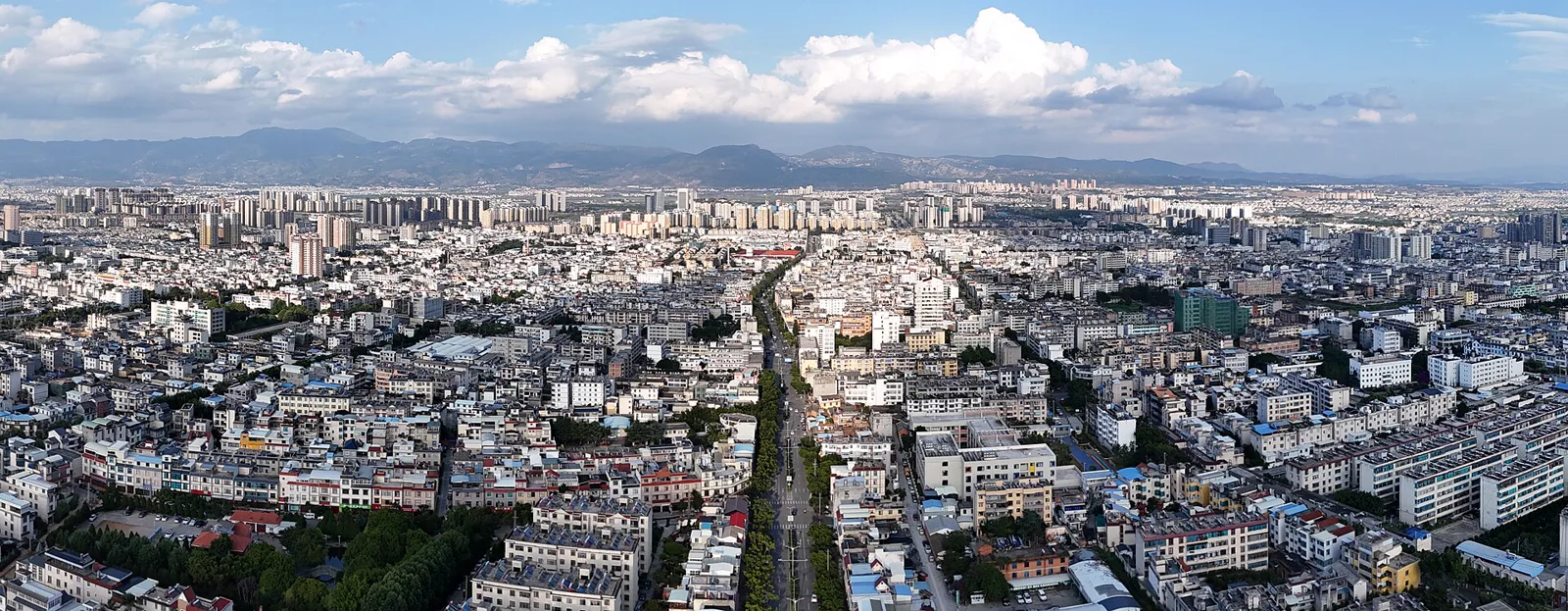
City Guide · Yunnan🟢 Field verified
Baoshan, Yunnan: 185 Hot Springs, Two Airports, and a 90-Minute Train From Dali
The hot spring city next to Dali that most Western itineraries skip, and what it actually costs.
The hot spring city next to Dali that most Western itineraries skip, and what it actually costs.
Every Yunnan itinerary hits the same three names: Kunming, Dali, Lijiang. An hour and a half by train from Dali sits a city most of those itineraries skip, even though it has two airports, a concentration of hot springs that earned the whole prefecture the nickname "World Hot Spring Museum," and a valley nearby where January afternoons sit around 26°C.
Go if you've done the Dali–Lijiang circuit and want a week at half the pace. This is Baoshan prefecture in western Yunnan — not the Baoshan District in Shanghai — roughly 2.5 million people, almost no Western profile. One commenter under a Chinese travel video described it better than any brochure: his allergy symptoms eased noticeably shortly after arrival.
The numbers that made me stop scrolling
Chinese travel creator Baozi Tancheng (包子探城, literally "Baozi Explores Cities") posted a Baoshan episode on Douyin in December 2025: 412,000 likes, 184,000 saves, 17,000 comments (https://www.douyin.com/video/7578827959377595699). That made it the channel's second-most-liked episode ever, a hair behind Nanjing. Baoshan's own tourism bureau even showed up in the comments to say thanks.
The spec sheet they pulled together:
| What | Figure |
|---|---|
| Hot springs in the prefecture | 185 |
| Airports | 2 (Baoshan Yunrui, Tengchong Tuofeng) |
| Train to Dali | about 1.5 hours (1h30m–1h50m) |
| Tier-3A hospitals (China's top-tier general hospital rating) | 2 |
| Large supermarkets | 5 |
| Lujiangba valley elevation | 680 m |
| Lujiangba winter daytime | about 26°C |
| Lujiangba winter low | no colder than 10°C |
The "World Hot Spring Museum" label is real enough that the city uses it in official press materials. Different agencies count differently: the video says 185, Yunnan tourism press has written 240-plus naturally flowing springs, and a September 2025 government briefing claimed over 300 hot-water vents. Sulfur, carbonic, selenium, radon: nearly every category shows up. The figure that matters is the ratio: this is a region built around soaking, not a city that happens to have a bathhouse.
Where the hot springs actually are
Baoshan prefecture is bigger than the city: it covers the urban area, the Lujiangba valley, and Tengchong, a county-level city about an hour's drive west. The famous scenery is Tengchong's; the everyday soak culture belongs to the city; the valley is the climate escape in between.
The valley doing the heavy lifting is Lujiangba (潞江坝, Lùjiāngbà), wedged between Baoshan and Dehong. Dry subtropical valley at 680 meters, Gaoligong Mountains on one side, Salween River on the other. Winter days run about 26°C and nights stay above 10°C, which is why the Chinese slow-living crowd calls it a winter escape (避寒). The same climate makes it a serious coffee region: the valley claims to be China's number-one coffee township, and riding through, it's easy to believe. It's also a fruit region with a long season, market stalls changing contents by the month. Pack mosquito repellent for the valley evenings.
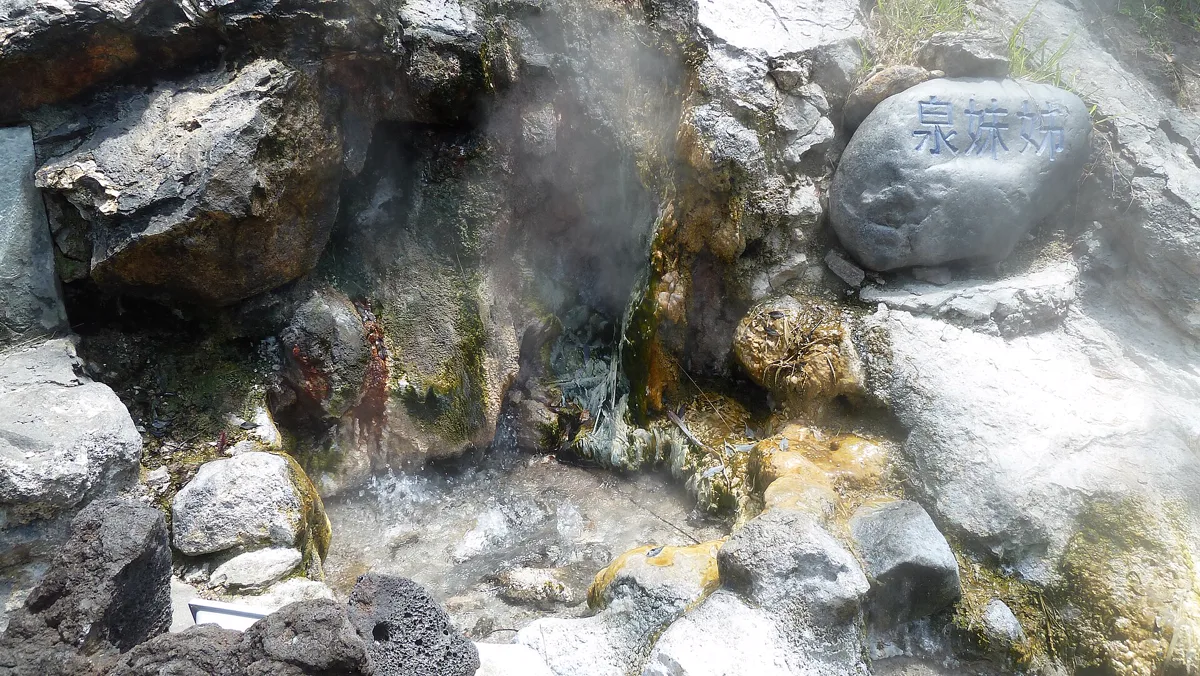
There's a saying in Yunnan tourism circles: for hot springs, look to Yunnan; in Yunnan, look to Baoshan. The showpiece ones sit in Tengchong, part of the same prefecture, an hour west: the Rehai geothermal area, 80-plus vents and pools that hit 90°C, plus the old town of Heshun and the ginkgo village. The pools genuinely reach 90°C, so stay on the marked paths. Baoshan city has the numbers and the everyday soak culture; Tengchong has the scenery. The commenters bounce between the two, which is exactly the point.
One culture note for first-timers: Chinese bathhouses are full nudity and gender-separated, not the swimsuit style of a Japanese onsen. Nobody stares; that's just how it works. In the city the springs are ordinary life: old men with tea outside the bathhouse, the market doing its morning business next door.
Our attempt at an honest version of the "is it foreigner-friendly?" question. Five means zero friction; one means bring a phrasebook and patience. Scores reflect what we've verified so far; anything still open is flagged in the note at the end of this page.
Foreigner-Friendly Scorecardfive means zero friction · one means patience
Menus, bus signs and shop fronts are Chinese-first. Staff in supermarkets and coffee shops will pull up translation apps and help you anyway; English menus mostly exist in Tengchong's tourist strip.
Alipay and WeChat Pay accept foreign Visa and Mastercard. Transactions under ¥200 carry no service fee; at ¥200 and above a 3% fee applies, so splitting big purchases into smaller ones dodges it. Five large supermarkets plus an almost-cashless street economy mean you'll rarely touch paper money once set up.
Two airports, a 90-minute train to Dali, a third airport at Mangshi a short drive away. Unusually connected for a city this size.
Fruit valley, coffee, cheap noodles, market breakfasts: the food story is strong. You'll order by pointing at pictures more than reading menus.
Two tier-3A hospitals cover the "what if" factor, and small-city China is about as low-crime as it gets.
What it costs
On prices
The prices below were checked in person in January 2026, and they were accurate as of then. Small-town China moves fast — menus get reprinted, guesthouses change hands. Treat these as a reliable baseline, not a contract. If you see different on the ground, that's the current reality, and it goes into the next field check.
Straight talk: the prices below were checked in person in January 2026, and they were accurate as of then. This site doesn't publish numbers it hasn't checked — that rule still holds, and the note at the end of this page says how rechecks work. What we also have: a local commenter reports apartments selling for ¥3,000–5,000 per square meter (about $420–700 at 7 yuan to the dollar, exchange rate as of August 2026), in a town locals call cheap in the way only they can mean it. Note: foreign nationals cannot purchase residential property in China, so treat that number as cost-of-living context, not a buying guide.
| Hot spring option | Price (as of my last visit) |
|---|---|
| Public bathhouse, Baoshan city | ¥30–80 |
| Resort day pass, Lujiangba | ¥80–150 |
| Rehai scenic area, Tengchong | ¥50–100 |
| Market staple | Price (as of my last visit) |
|---|---|
| Breakfast noodles, bowl | ¥6–12 |
| Coffee, local beans, cafe | ¥10–25 |
| Fruit, per kilo | ¥5–15 |
Ordering is pointing at a picture. The noodle lady will figure out what you want anyway.
Daily budget, adding up the prices above (¥7 ≈ $1, exchange rate as of August 2026):
| Item | Per day (as of my last visit) |
|---|---|
| Room, budget guesthouse | ¥80–150 |
| Three meals, local places | ¥60–100 |
| One hot spring session | ¥30–80 |
| Transport, bus and the odd taxi | ¥10–30 |
| Total | ¥180–360, about $25–50 |
The "$35 a day" figure floating around is this arithmetic, not a measurement — and it doesn't include flights or a Tengchong day-trip car hire, both of which push the number up. The full cost diary (market prices, bathhouse tickets, guesthouse rates) gets rechecked on every visit; the next round is September 2026. If a price has moved since I checked it, the menu is right and this page is late.
Getting there
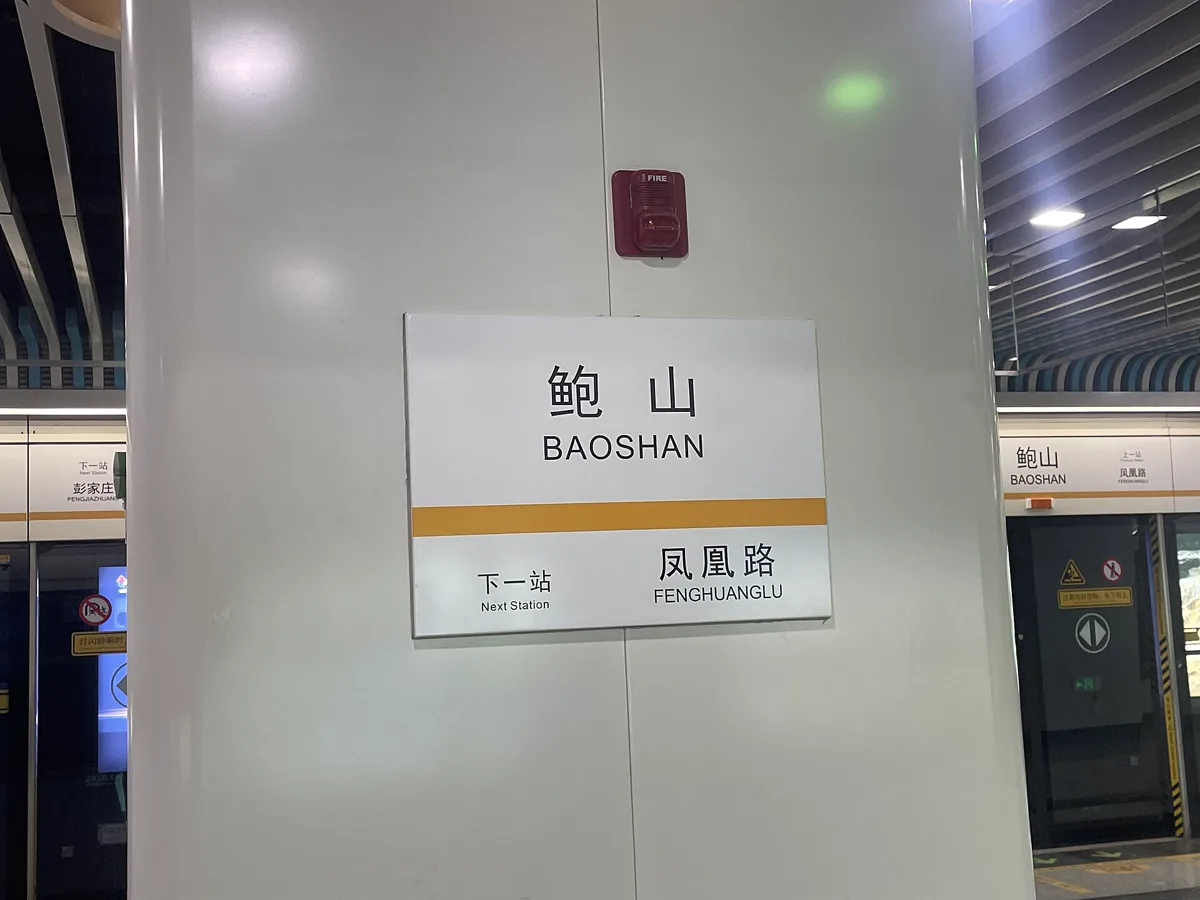
Fly: Kunming to Baoshan is about an hour, and some hubs like Chengdu also connect. Train: the Dali–Baoshan hop runs 1h30m–1h50m on the current timetable, not the tidy "one hour" the video claimed. That's the ride itself, not including the transfer from Dali Old Town to the station, which can get chaotic in peak season. Kunming to Dali by rail takes about two hours, so Kunming to Baoshan is a half day door to door. On a layover through Kunming, the 240-hour transit scheme (10 days, and it covers US passports) includes Yunnan, a way to fit Baoshan into a longer routing without a visa.
The honest part
English is thin. Download an offline translation pack before you arrive, set up Alipay or WeChat Pay with a foreign card (Visa and Mastercard both work; under ¥200 there's no service fee, at ¥200 and above a 3% charge applies, so split big payments), and carry some cash as backup. Foreign visitors have spent the last decade going to Dali instead, so Baoshan's infrastructure is built for domestic travelers. That is both the friction and the appeal: nobody will upsell you, the noodle shop lady will figure out what you want, and the bathhouse cashier has seen everything.
Last verified: August 2026. Visa policies change frequently — check the official list before booking (https://en.nia.gov.cn/n147418/n147463/c183390/content.html).
Visa context: China's unilateral visa-free list covers 50 countries for up to 30 days per visit (most of Europe, Japan, South Korea, Australia, New Zealand, and since February 2026 the UK and Canada), running through the end of 2026. That's the practical envelope this kind of trip fits inside.
Who should go
Go if you care about coffee, because the valley is the reason. Go if you ride a motorcycle, since the videos note there's no motorcycle ban and riverside camping and fishing are part of the local rhythm.
Skip it if you need hand-holding in English, if you want nightlife, or if "hot spring town" makes you picture a luxury spa resort. It's a working city with a soaking culture attached, and that's the whole point.
One commenter put it plainly: "I'm in Sanya right now, it's too hot and prices are crazy. I'm looking for somewhere that's neither too hot nor too cold: Pu'er, Baoshan, Tengchong, help me choose." That's the audience this place serves. It's also the audience we're writing for.
We're building slow-travel guides to small Chinese cities, street market by street market. Baoshan's full cost diary is on the list. Want it when it drops? Join the newsletter.
Next stop on the slow Yunnan line: Mile, the grape town 35 minutes from Kunming — hot springs plumbed into the hotels, a French grape that died out in France, and the easiest slow weekend in Yunnan.
Sources
- Baozi Tancheng (包子探城), Baoshan episode, Douyin, December 2025: https://www.douyin.com/video/7578827959377595699
- National Immigration Administration, List of Countries Covered by Unilateral Visa Exemption (updated February 2026): https://en.nia.gov.cn/n147418/n147463/c183390/content.html
- Gov.cn, "China to extend unilateral visa-free policy for over 40 countries, with Sweden newly added" (November 2025): https://english.www.gov.cn/news/202511/04/content_WS690964b0c6d00ca5f9a0749d.html
- Baoshan prefecture government, tourism promotion (June 2026): "240-plus natural hot springs, World Hot Spring Museum": https://www.baoshan.gov.cn/info/7794/10384104.htm
- Kunming Information Port / Tengchong tourism (October 2025): "over 300 hot-water vents": https://www.kunming.cn/news/c/2025-10-14/13985874.shtml
Image credits
- Cover — Baoshan city, from the air — the skyline over the highland bowl. Ruili River's Water · CC BY-SA 4.0 · https://commons.wikimedia.org/wiki/File:%E4%BF%9D%E5%B1%B1%E5%B8%82%E5%A4%A9%E9%99%85%E7%BA%BF_-_%E8%88%AA%E6%8B%8D_-_%E5%85%A8%E6%99%AF_-_2024-06-02_02.jpg
- Photo — Baoshan railway station — the 90-minute train from Dali lands here. Gao Wenhai · CC BY-SA 4.0 · https://commons.wikimedia.org/wiki/File:Baoshan_Station_20230102_09.jpg
- Photo — Rehai geothermal area, Tengchong — 80-plus vents and pools in the same prefecture. STW932 · CC BY-SA 4.0 · https://commons.wikimedia.org/wiki/File:Rehai_25.jpg
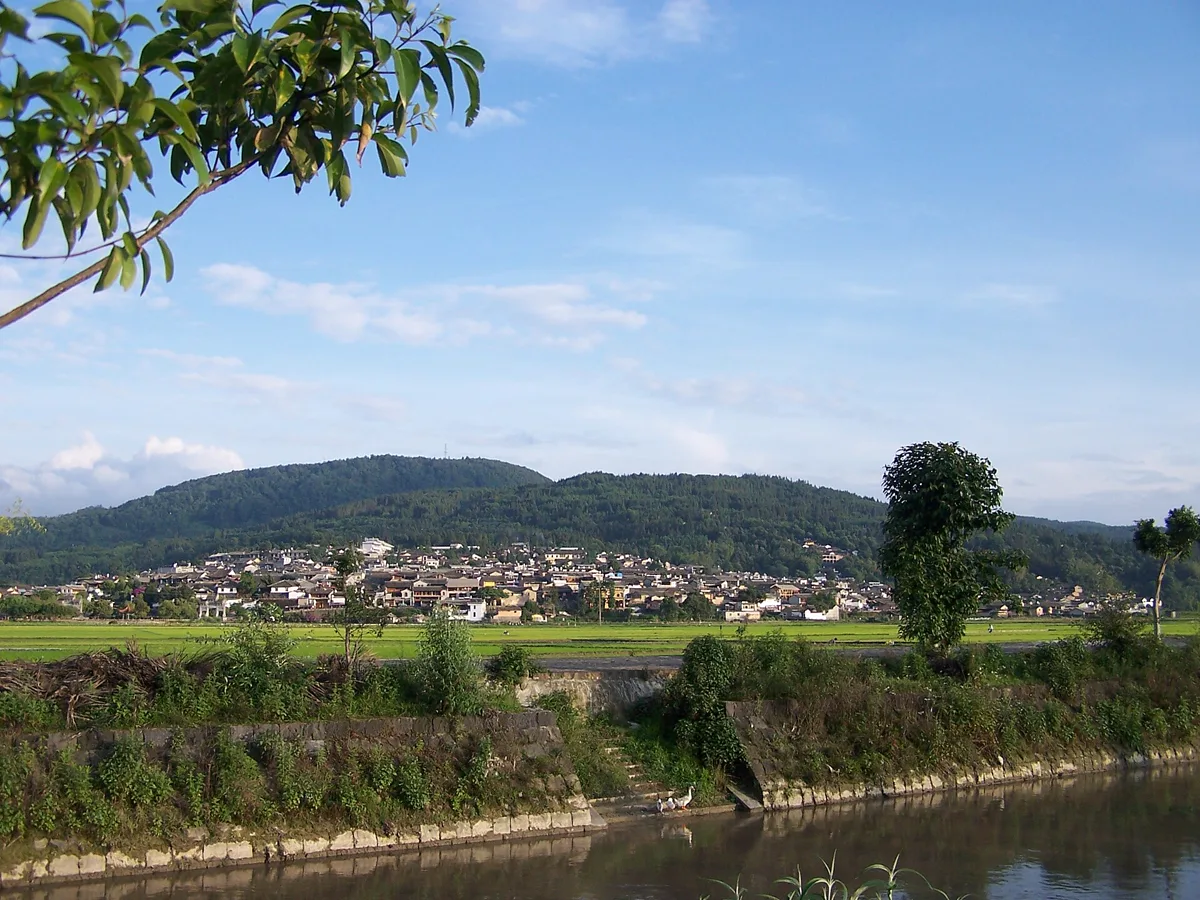
- Photo — Heshun old town, an hour west of Baoshan city. oldhouse.yin · CC BY-SA 3.0 · https://commons.wikimedia.org/wiki/File:Heshun_Old_Town_-_panoramio.jpg
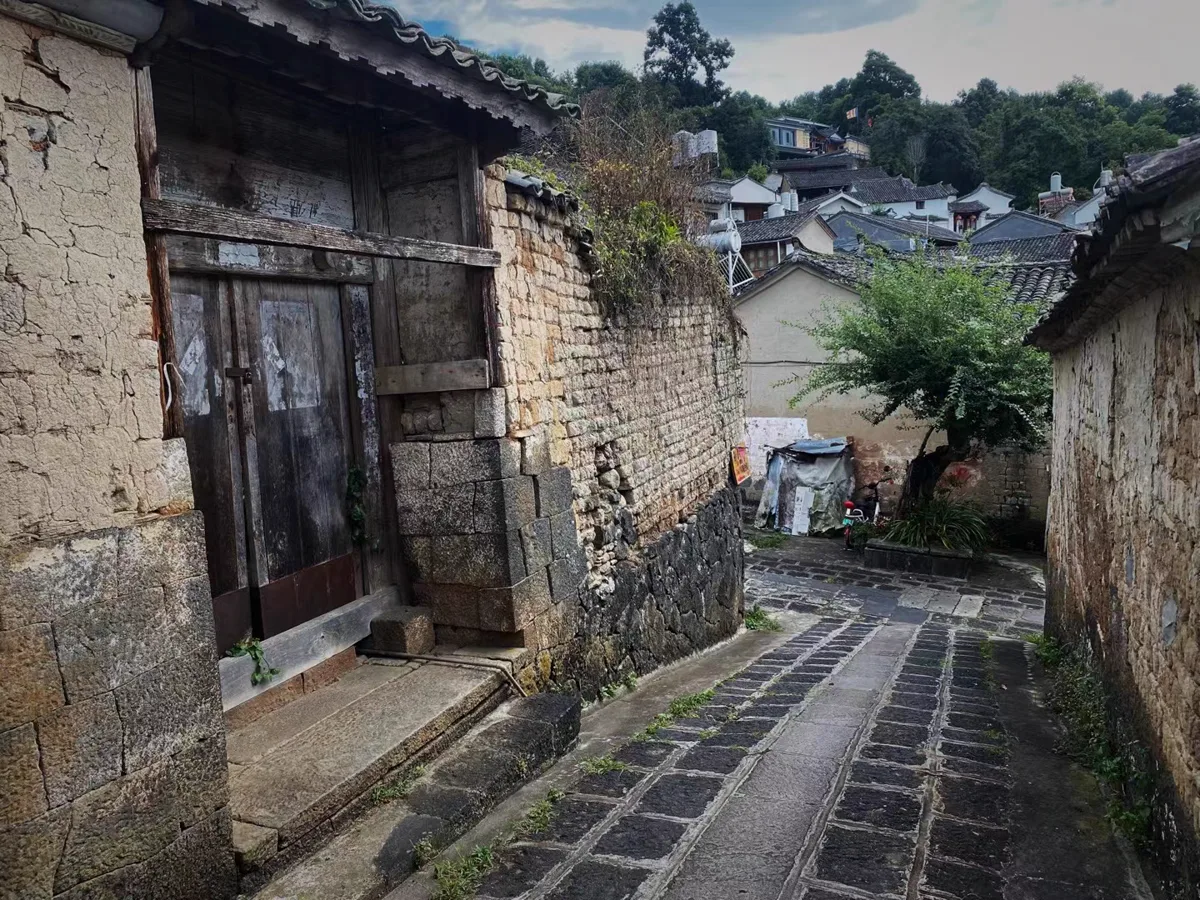
- Photo — Slate street and earth-brick houses in Heshun. Huangdan2060 · CC BY 3.0 · https://commons.wikimedia.org/wiki/File:Slate_street_and_earth-brick_houses_in_Heshun,_Baoshan,_Yunnan,_China.jpg
All photographs are used under the Creative Commons licenses linked above, via Wikimedia Commons.